Slanted ceilings give a bedroom undeniable cozy charm, but they also make you want to throw your tape measure out the window. If you are tired of bumping your head or staring at a vast expanse of empty drywall, you are in the right place. Let’s fix that awkward architectural quirk without losing your sanity.
Why Slanted Ceilings Feel So Tricky
Let’s be honest for a second. Standard furniture rarely fits against a sloped wall, and painting them requires the patience of a saint.
You end up with dead space that mocks you every time you try to find a place for your wardrobe. But once you stop fighting the architecture and start working with it, everything changes. The key is embracing the coziness instead of trying to make a slanted room look like a boxy suburban master suite. It’s never going to be one. So, stop trying.
Paint Strategies That Don’t Suck
Everyone defaults to painting sloped ceilings bright white to make the room feel bigger. Spoiler alert: it often just looks like an unfinished attic.
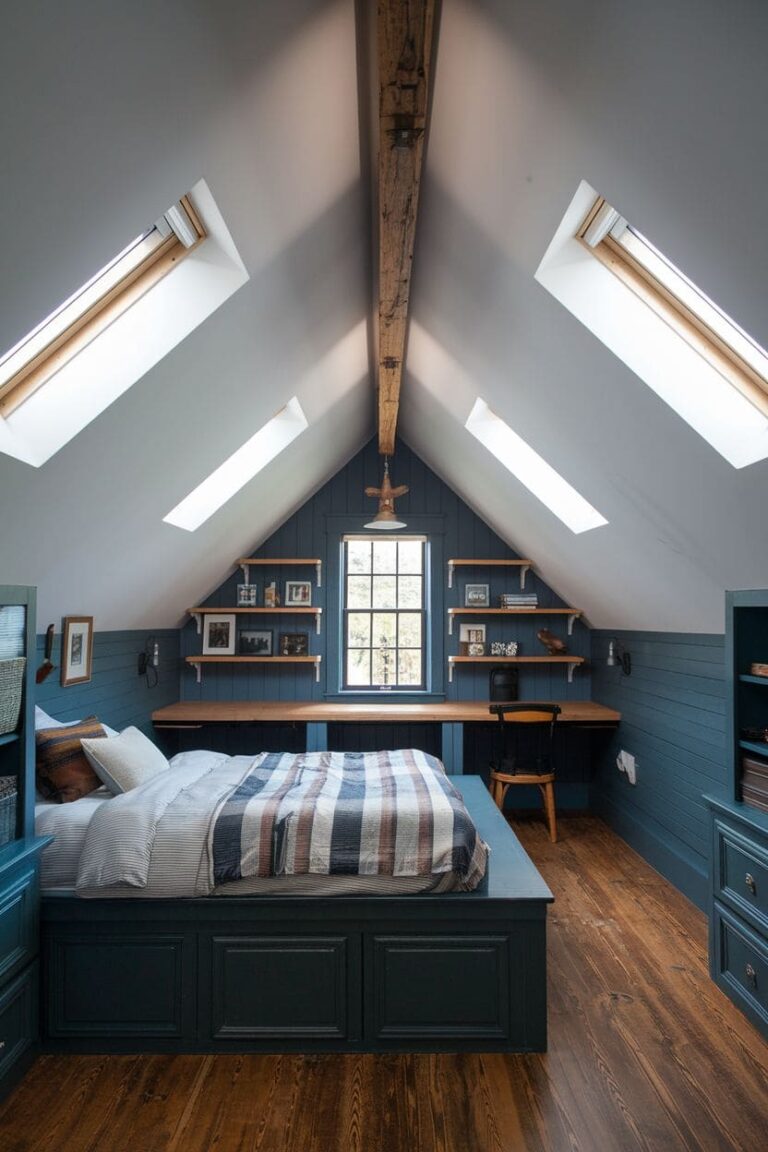
Instead, lean into the moodiness. Drenching the entire room—walls and sloped ceiling alike—in a dark, saturated color blurs the lines. It creates a cocoon effect that makes the awkward angles disappear into the shadows.
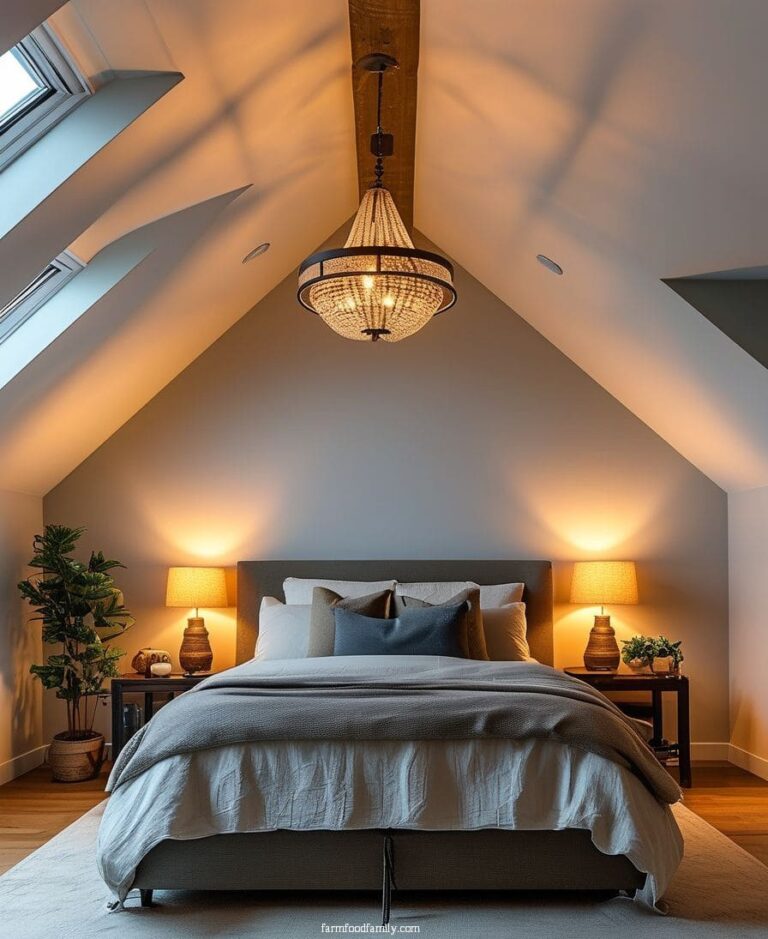
If dark isn’t your vibe, try a monochrome pastel. Just keep the ceiling and the walls the same shade. Breaking them up with a stark white ceiling line only chops the room in half and draws your eye straight to the low clearance.
Furniture Placement and Low-Profile Layouts
Standard nightstands and tall dressers are the enemy here. You need to rethink your scale.
- Low-profile bed frame: Keeps your sleeping area grounded and prevents you from feeling cramped under the slope.
- Built-in storage: Custom drawers tucked into the lowest part of the knee wall maximize every single inch of dead space.
- Floating desks: Place a workspace right under the lowest point of the ceiling since you will be sitting down anyway.
- Platform storage beds: Eliminates the need for bulky dressers that simply won’t fit under the eaves.
Lighting the Attic Bedroom
Lighting a room with angular architecture is a minor engineering puzzle. Overhead fixtures often cast weird shadows, and floor lamps take up precious floor space.
Sconces are your absolute best friend here. Mount them directly onto the slanted walls to create a warm, layered glow.
If you have exposed beams, wrap string lights or install directional spotlights along them. Task lighting is also non-negotiable if you are carving out a reading nook or a desk space in the low-ceiling zone.
Pros and Cons of Slanted Bedrooms
| Feature | The Good | The Bad |
|---|---|---|
| Aesthetics | Maximum cozy cabin energy | Hard to make look modern |
| Storage | Great for custom built-ins | Standard furniture won’t fit |
| Layout | Creates distinct functional zones | Low headroom in corners |
Common Mistakes to Avoid
The biggest trap people fall into is pushing all the furniture flat against the tallest wall and leaving the rest of the room as an empty wasteland. Spread things out.
Another classic blunder is hanging heavy artwork on the slope. Unless you enjoy things swinging precariously over your face, keep wall art on the vertical knee walls.
Finally, don’t ignore window treatments. Awkward triangular or skylight windows need custom motorized shades unless you want to climb a ladder every morning.
Frequently Asked Questions
How do I arrange bedroom furniture with a sloped ceiling?
Anchor your bed against the tallest wall or tuck it snugly under the lowest slope to create a cozy sleeping nook. Use custom low-profile furniture along the knee walls for storage rather than standard tall dressers.
What color should I paint a room with slanted walls?
Paint the walls and the slanted ceiling the exact same color. This blurs the harsh architectural lines and makes the space feel intentionally cozy instead of cramped.
How do you maximize storage in an attic bedroom?
Invest in custom built-ins tailored to the exact pitch of your ceiling. Low drawers, sliding wardrobes, and under-bed storage boxes are essential for reclaiming dead space.
Stop stressing over your room’s weird angles and start treating them like the design feature they actually are. A little paint, low-profile furniture, and smart lighting will turn that awkward wedge into your favorite room in the house.